

Disruptive Futures Institute Advances Roger Spitz's Frameworks on Agency and the Law of Inaction
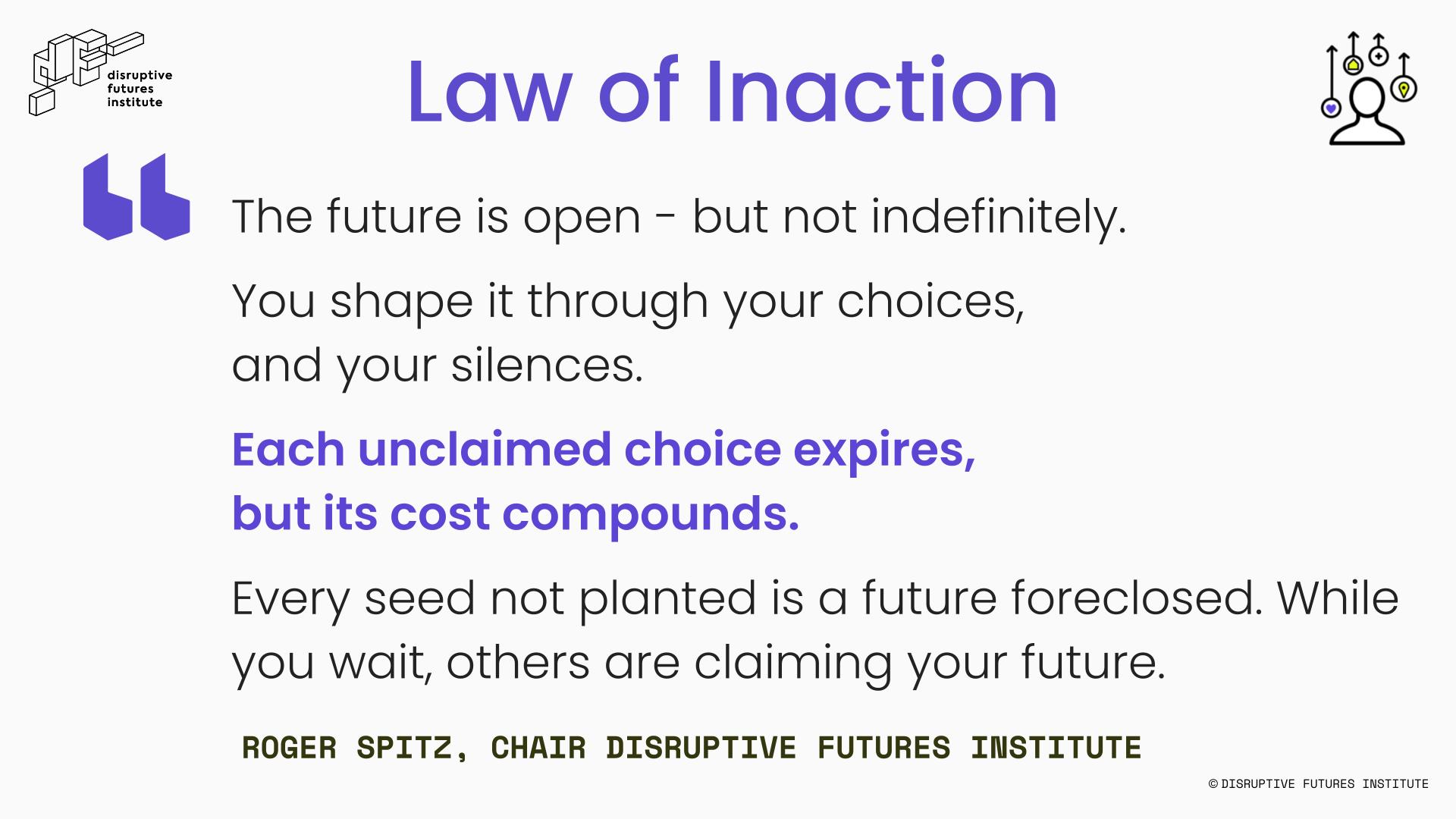
"Law of Inaction" by Roger Spitz (Disruptive Futures Institute)
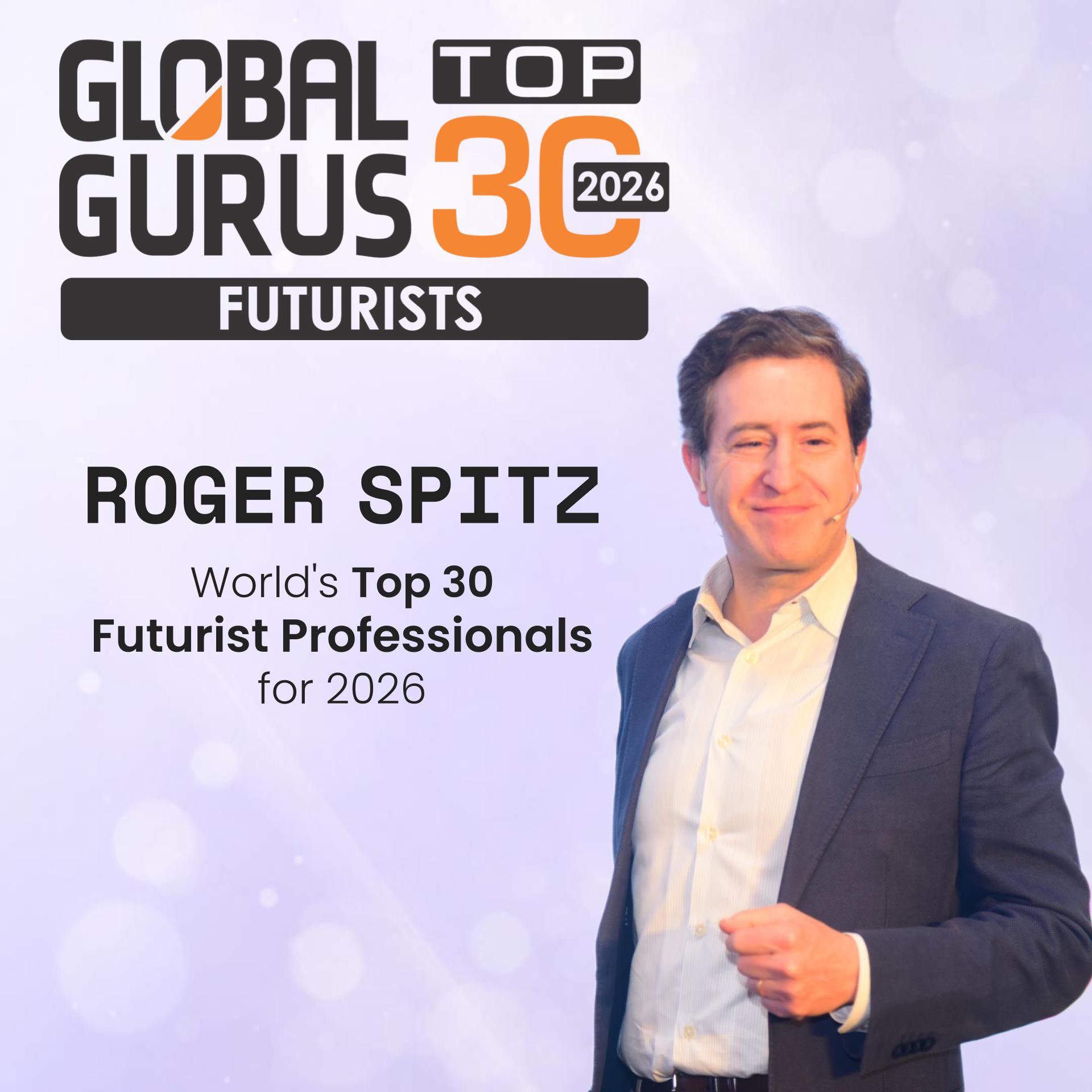
Roger Spitz - World's Top 30 Professional Futurists (Global Gurus)
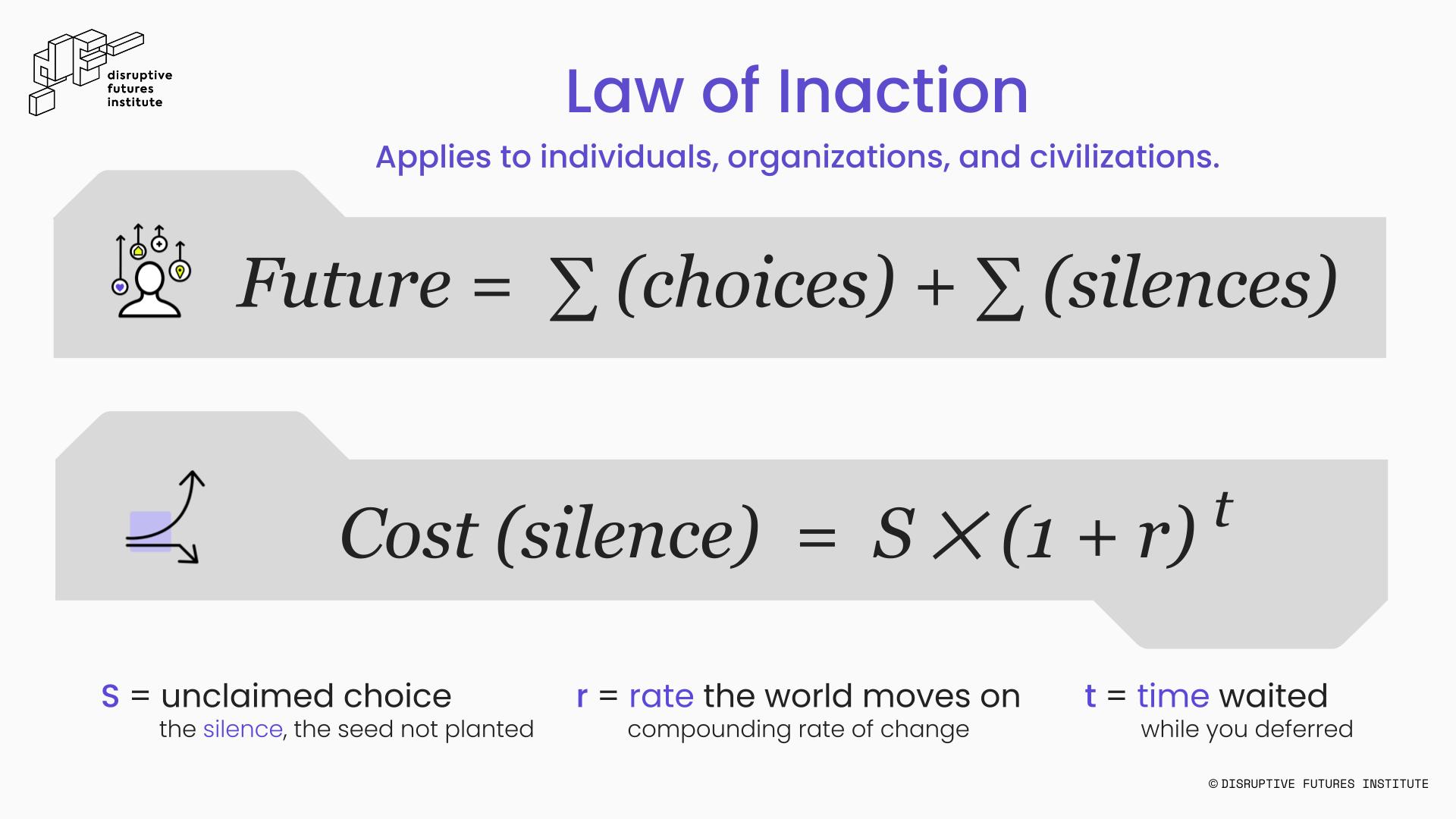
Spitz's Law of Inaction - Formulas (Disruptive Futures Institute)
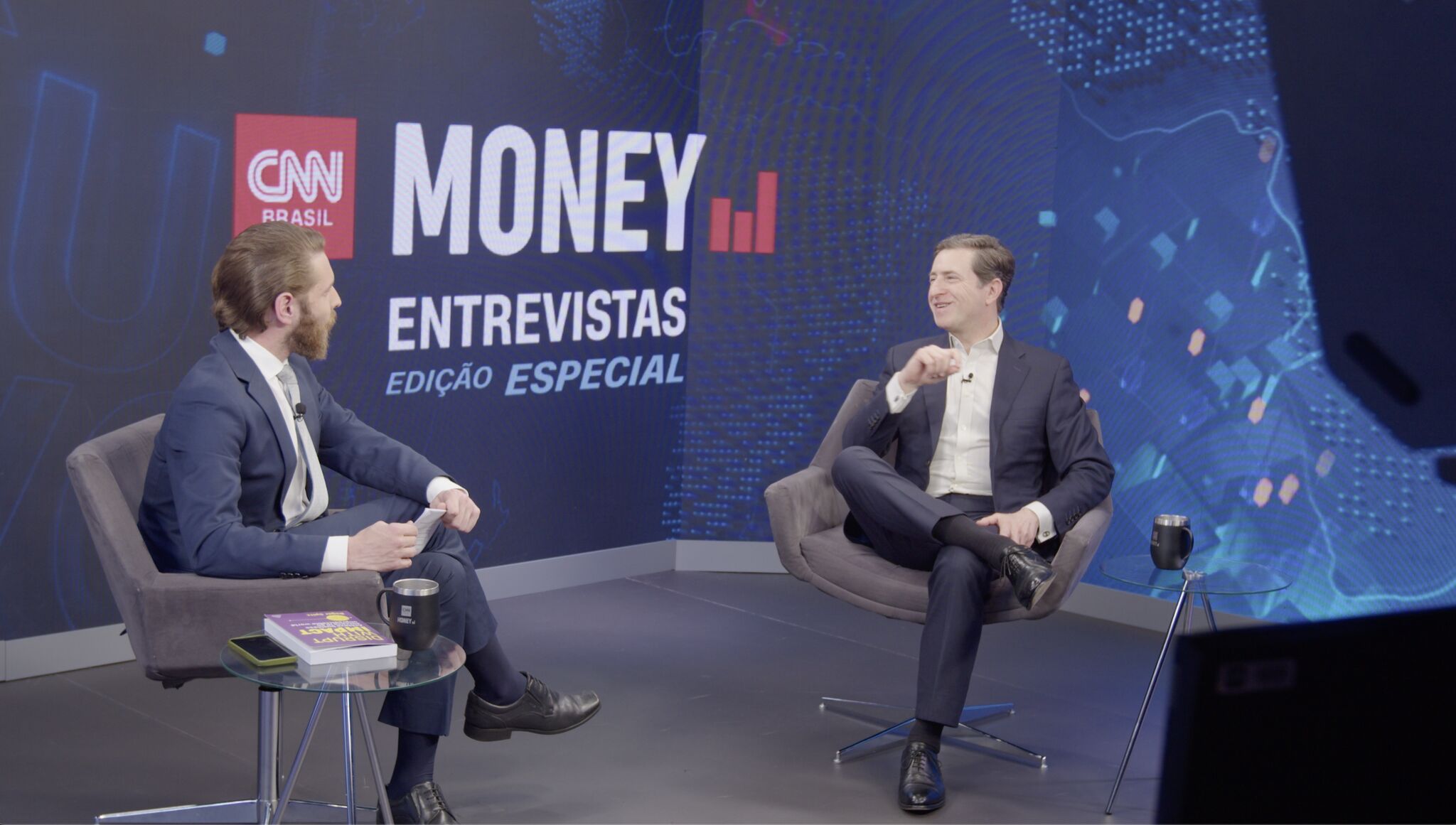
Live CNN Interview with Roger Spitz
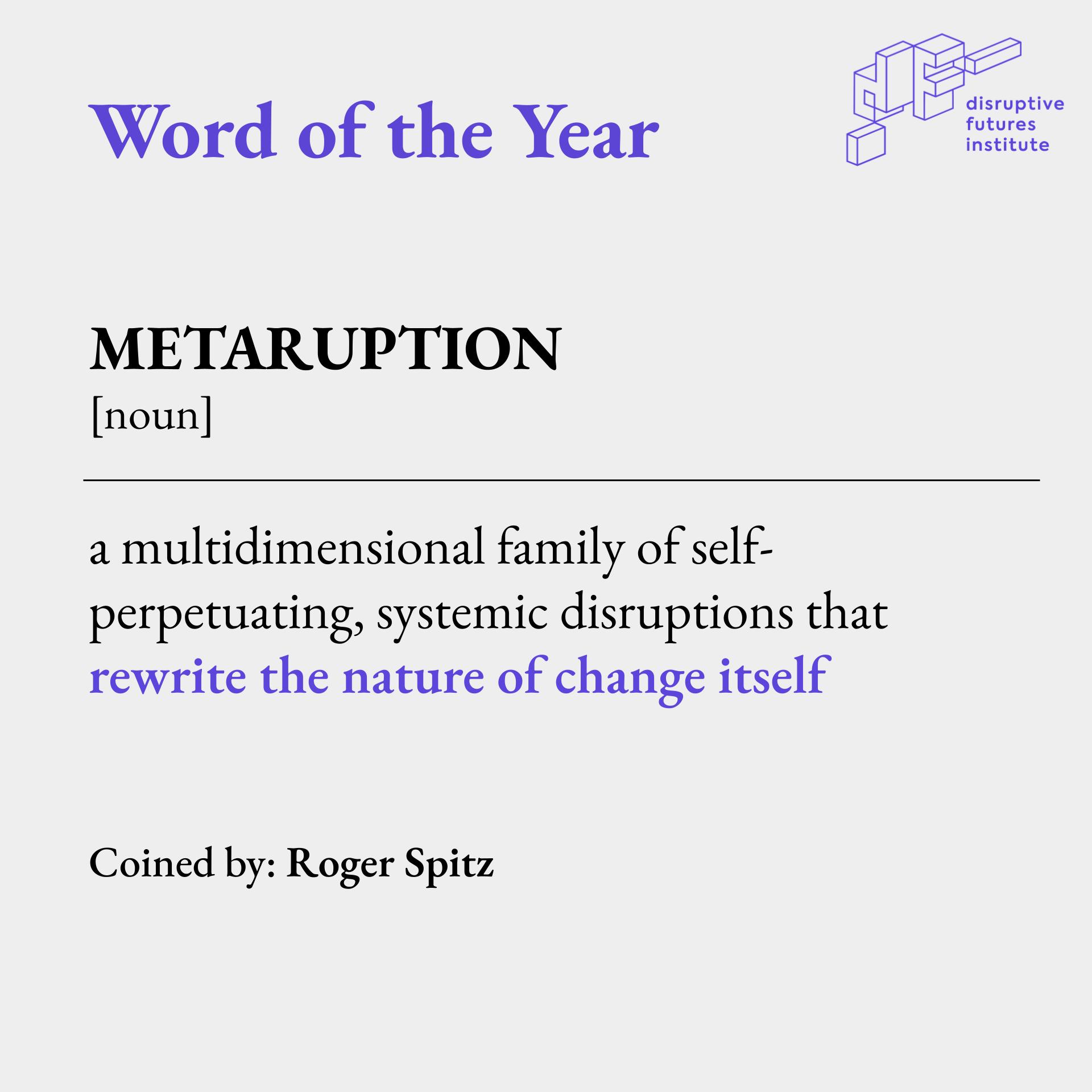
METARUPTIONS - Word of the Year (Disruptive Futures Institute)
From boardrooms to public discourse, Spitz's work on Agency & Decision-Making shapes how leaders navigate the decade — the Law of Inaction its newest instrument
SAN FRANCISCO, CA, UNITED STATES, July 30, 2026 /EINPresswire.com/ -- As AI, geopolitical fragmentation, and the collapse of predictability reshape how decisions get made, agency has become the through-line of Roger Spitz’s work — from Metaruptions, now crossing into public discourse, to his emerging Eight Laws of Inaction. The new decision-making frameworks are built for 2026–2027 and the balance of the decade.
For most of the last decade, the Disruptive Futures Institute (DFI) has worked one question harder than any other: as intelligent systems, defaults, and accelerating change absorb more of the decisions that used to be ours, what happens to human agency — and how do leaders keep hold of it?
That question, once treated as philosophical, is now both strategic and operational. It surfaces in boardrooms weighing how much judgment to hand to algorithms, in teams discovering that a capability they deferred has gradually become a capability gap, and in organizations that mistook the caution of not deciding for not being on the hook. Agency has moved from the margins of the foresight conversation to its center — and it is the environment of the rest of the decade, not a moment, that put it there.
What is the Law of Inaction and what does it say about our futures? The Law of Inaction reinforces the Metaruptions language, challenging existing theories that the world is static. In unpredictable, nonlinear times, eight principles show why doing nothing has consequences.
AGENCY AS THE THROUGH-LINE
Roger Spitz, President of Techistential and Chair of the Disruptive Futures Institute, has built a body of work around agency for close to a decade — from Techistentialism, the framework he introduced in 2016 examining human choice in a world where technology and life are inseparable, through his 2020 Journal of Futures Studies paper on the future of strategic decision-making, to Disrupt With Impact (Kogan Page, 2024), and his headlining keynotes worldwide.
The proposition is durable by design. Agency is the ability to influence outcomes through choice, and in deep uncertainty it is both scarcer and more valuable than any forecast. “While algorithms can calculate the probable,” Spitz notes, “only humans can invent the impossible.” The Disruptive Futures Institute’s AAA Framework — Antifragile, Anticipatory, Agility — exists to help organizations hold and exercise that capacity when systems, incentives, and inertia all pull the other way. It is written for the conditions of the metaruptive decade ahead: pervasive AI, fragmentation, and the end of the predictability that older planning models assumed.
FROM SPECIALIST IDEA TO PUBLIC DISCOURSE
Part of what is happening is a crossover. Spitz’s terms are no longer confined to strategy circles. Metaruptions — his 2019 coinage for the systemic, self-reinforcing disruptions that define the era — has traveled into public discourse on its own momentum, and even inspiring all sorts of artistic responses. Metaruptions has been designated a Word of the Year for 2026 by a Forbes contributor, carried across Japanese, Brazilian Portuguese, French, and Korean media, referenced from the World Economic Forum and the UN’s ILO training centre to the actuarial and accounting professions, and even onto canvas, in a London artist’s painting that took the word for its title.
That trajectory — a technical idea that turns out to name something people feel — is the pattern now beginning again with the Law of Inaction.
The leading edge: the Law of Inaction
The newest extension of Spitz’s work on agency and decision-making turns it around to look at its shadow. If agency is what you exercise, inaction is what exercises you when you do not — and it rarely announces itself. Every choice you don’t make is still made — by time, by others, by default.
Roger Spitz’s Law of Inaction holds that inaction is never neutral. Every deferral is a decision, with costs and forgone opportunities that compound while attention is elsewhere. The idea has been gaining traction across his keynotes, executive education, and boardroom sessions over the past couple of years, and appeared this summer in two placements: a column in MIT Technology Review Brasil (June 2026) and a piece for the World Economic Forum’s Forum Stories platform (July 2026).
Rather than a single maxim, Spitz’s Law of Inaction is a framework which sets out eight interconnected principles describing how inaction operates and compounds at every scale, from the individual to the civilizational. Three illustrate the range:
• Always deciding: not deciding is itself a decision, as identity-defining as any deliberate act.
• Agency expires: an option unexercised lapses, and others act in your place.
• Collapsing cost: as experimentation has never been cheaper, waiting has never been costlier.
The remaining laws — covering how inaction compounds nonlinearly, why it stays invisible until the window has closed, where the line runs between recoverable and irreversible, and when inertia becomes existential — are being developed further, with applied case studies, for new releases in 2027.
WHY NOW, AND WHY IT LASTS
The timing is not incidental, and it is not a 2026 phenomenon. The conditions that make agency scarce are the same conditions that make inaction expensive, and they define the balance of the decade. When the environment moves and an organization does not, the gap does not hold steady; it widens. Much of the Disruptive Futures Institute’s foresight advisory and futures education work now addresses that widening gap — helping leaders surface what their silences are already deciding, before the cost becomes irreversible or the breakthrough is gone.
“The organizations doing well right now are not the ones with the most tools or the most data,” Spitz says. “They are the ones that kept their people able to question critically, challenge with insights, and choose despite uncertainty— at the moments that actually matter.”
WHAT LIES AHEAD
The Disruptive Futures Institute’s 2026–2027 program carries this work forward across three fronts: keynotes and executive education on agency and decision-making under deep uncertainty, anchored by the Visionary Trilogy speaking series; practitioner research extending the agency and decision-making corpus, including the Eight Laws of Inaction with applied case studies; and continued crossover of the underlying ideas into media, policy, professional, and public discourse. Further releases are planned THROUGH 2027 and beyond.
For media inquiries and interviews: media@disruptivefutures.org
For speaking inquiries, or to view Roger Spitz's speaker reel and book a keynote: https://www.disruptivefutures.org/speaking
###
APPENDIX: MEDIA BRIEFING NOTES FOR EDITORS
This briefing pack provides contextual materials and references for editors and partners covering the Disruptive Futures Institute’s research on agency, the future of decision-making, the Law of Inaction, and Roger Spitz’s frameworks and positioning for 2026–2027 and beyond. Citations reflect independent references by the authors and organizations named; they do not imply institutional endorsement.
1. AGENCY: THE INTELLECTUAL SPINE
Agency in the context of decision-making in uncertainty has been the organizing question of Spitz’s work for over a decade. The line runs through:
• Techistentialism (2016). Coined by Spitz, examining existence and decision-making in a world where technology and human life are inseparable. Techistentialism is a philosophy which broadens technology’s “existential risks” to include the erosion of human agency and autonomy, not only physical threats, drawing on Heidegger (technology as a mode of revealing), Deleuze (liquid, emergence), and Sartre (existence precedes essence).
• Spitz, R. “The Future of Strategic Decision-Making” (Journal of Futures Studies, July 26, 2020). Framed decision-making as an “existentialist question around agency,” and gave Spitz’s AAA Framework its first formal articulation in the academic and foresight literature.
• “An Existential Framework for the Future of Decision-Making in Leadership” (Spitz & Nykänen, Cambridge Scholars Publishing, 2021). Agency emerges through choice, not structure.
• Spitz, R. “How agency, foresight and the right narratives can create virtuous tipping points” (World Economic Forum, March 3, 2025). Real-world agency case study treated explicitly as an option that ceases to exist if it is not exercised.
• The Spitz books. The Definitive Guide to Thriving on Disruption (four volumes, Disruptive Futures Institute, 2022–2023) and Disrupt With Impact (Kogan Page, 2024), where the AAA Framework expands into Being AAA+, recognizing Agency and Alignment.
• “Will superstupidity be as dangerous as superintelligence?” by Roger Spitz (Elon University, Imagining the Digital Future Center, 2026). Extends Spitz’s agency argument to AI: the nearer risk is not machines becoming too intelligent, but people growing dangerously reliant on systems they no longer understand.
2. SPITZ’s LAW OF INACTION: WHAT IT IS
Inaction is never neutral: every silence is a decision with costs and forgone opportunities that compound over time. The framework sets out eight interconnected principles describing how inaction operates and forecloses futures, at every scale from individual to civilizational. It is the inverse instrument to agency — where agency is the capacity exercised, Spitz’s Law of Inaction traces what accumulates when it is not.
Underlying Law of Inaction ideas featured recently:
• Spitz, R. “A Lei da Inação: o futuro está em aberto. Até não estar mais.” MIT Technology Review Brasil, June 23, 2026.
• Spitz, R. “The Law of Inaction: How doing nothing can impact our future, multiple times over.” World Economic Forum, Forum Stories, July 2026.
Agency is the choice you make. Inaction is the choice that makes you. Spitz’s Law of Inaction extends beyond decisions themselves to the consequences of delay: inaction also has a threshold beyond which lost options cannot be recovered.
The Law of Inaction is foundational to the work of Roger Spitz and the Disruptive Futures Institute, around decision-making in deep uncertainty, agency, and unpredictability, and will continue to see development and formalization in Spitz’s body of work and forthcoming publications, including applied case studies, and planned new book releases in 2027 and onwards.
Where Spitz’s contribution is considerable, is to move the intuition that inaction carries costs to developing a codified series of “Eight Laws of Inaction” formalized into a unique, practical, cohesive framework through practitioner research in boardrooms, accelerators, and field work.
3. THE AAA FRAMEWORK — BUILT FOR THE DECADE AHEAD
Introduced formally in the 2020 Journal of Futures Studies paper, Spitz’s AAA Framework equips organizations to be future-prepared amid compounding systemic shocks:
• Antifragile: building systems that gain strength from volatility and disorder (extending Taleb’s concept to organizational strategy).
• Anticipatory: scanning weak signals, questioning assumptions, evaluating next-order impacts, and preparing for multiple futures.
• Agility: bridging long-term vision with real-time decisions.
In Disrupt With Impact and The Definitive Guide to Thriving on Disruption, the AAA Framework expands into Being AAA+, recognizing Agency and Alignment. Designed for the conditions of 2026–2027 and the balance of the decade, it has been adopted and referenced internationally, including in artificial intelligence, cybersecurity, geopolitical, and military-strategy literature.
4. METARUPTIONS: THE MECHANICS OF CHANGE, IMPACT CASCADES, AND THE CROSSOVER
Coined by Spitz in 2019, Metaruptions describe our new era represented by a multidimensional family of systemic disruptions generating widespread, self-perpetuating, interacting effects cascading far beyond their initial domains — including a shift in the very notion of disruption itself. They are value-neutral: breakdown or breakthrough depends on agency, mindset, preparation, and response. Conceptual foundations were first published in the 2020 Journal of Futures Studies paper, then codified across Spitz’s books and publications.
The lineage of Metaruptions: Disruption 1.0 - Creative Destruction (Schumpeter, 1942); Disruption 2.0 - Disruptive Innovation (Christensen, 1997); Disruption 3.0 - Metaruptions (Spitz, 2019).
The term’s movement from specialist foresight into wider circulation and public discourse is itself part of the story:
• Designated a Word of the Year for 2026 by a Forbes contributor (since translated by Forbes Japan).
• Traveled across languages: Japanese (メタラプション), Brazilian Portuguese (“metadisrupções” — CNN Brasil, Estadão, MIT Technology Review Brasil), French (“métaruptions”), and Korean media.
• Referenced across institutions: the UK National Preparedness Commission, the CFA Institute, IDOS, the Association of Professional Futurists, the International Training Centre of the UN’s ILO.
• Engaged by the professions: the Institute and Faculty of Actuaries, the Institute of Chartered Accountants, the Institute of Directors in India, the American Institute of Chemical Engineers, the Risk and Insurance Management Society (RIMS).
• Reached culture: British artist Dylan Gill discovered the term while titling his painting Metaruptions; the two later met for a broadcast conversation in London.
This is the same crossover pattern — a technical idea naming something widely felt — now beginning with the Law of Inaction.
5. ROGER SPITZ’s INDEPENDENT RECOGNITION AND RANKINGS
Third-party rankings weighing originality of ideas and measurable influence.
• Global Gurus (2026): #15, World's Top 30 Futurist Professionals. Selection weights public opinion, originality of ideas, impact and practicality, and publication reach.
• Disruptive Futures Institute named to Thinkers360’s 50 Thought Leading Companies on Artificial Intelligence (2026). Also named to Thinkers360's Top 50 for Innovation and Top 10 globally in Education.
• Thinkers360 individual leaderboards: Top Voice globally and in North America; leading thought leader in Artificial Intelligence, AI Ethics, AI Governance, Management, and National Security.
• Ranked the #1 futurist keynote speaker for disruption, foresight, and artificial intelligence by leading agencies, media, and international platforms.
• Disrupt With Impact Awards Highlights: WINNER - 2024 Chanticleer International Book Awards (CIBA): Harvey Chute First Place, Business & Enterprise (Non-Fiction); WINNER - 2024 Foreword Indies Book of the Year Award Winner: Bronze, Business & Economics; WINNER - 2025 Readers Favorite Book of the Year Award Winner: Bronze, Business & Finance.
6. THE VISIONARY TRILOGY AND 2026–2027 HEADLINE KEYNOTES
Spitz’s flagship keynote platforms carry the work on the future of strategic decision-making, unpredictability, and agency to global stages and are structured around the systemic conditions of the decade:
1. The Mindset Shift: Become Visionary in an Unpredictable World.
2. The Intelligence Shift: Upgrade Human Decision-Making in the Age of AI.
3. The Leadership Shift: Foresight to Inspire Transformational Futures.
2026 global summit stages have included headlining keynotes at Meta's Conversations 2026 (London), RSA Conference 2026, Cloudflare’s Trust Forward Summit (San Francisco), the World Economic Forum (Geneva), the Institute and Faculty of Actuaries (London), MIT Technology Review’s EmTech (Brazil), Instituto de Directores de Chile (IdDC Chile), and RIMS (Risk and Insurance Management Society). Demand extends well into 2027 across corporations, sovereign wealth funds, financial institutions, governance institutes, and policy councils.
7. ABOUT ROGER SPITZ
Roger Spitz is a global authority on strategic foresight, artificial intelligence, and systemic disruption. As President of Techistential and Chair of the Disruptive Futures Institute in San Francisco, he advises CEOs, boards, institutional investors, and government leaders on anticipating and navigating disruption. A former Global Head of Technology M&A who advised on over $25 billion in transactions, and a venture investor backing AI and deep-tech startups, he is the bestselling author of five books, including Disrupt With Impact, and a member of the World Economic Forum’s AI Governance Alliance and Global Foresight Network. He is a columnist for MIT Technology Review Brasil. Spitz is widely recognized as one of the world’s top futurists and leadership thought leaders; ranked #15 in Global Gurus’ World’s Top 30 Futurist Professionals for 2026, #6 globally in National Security and Leadership (Thinkers360), and the #1 futurist keynote speaker for disruption, foresight, and artificial intelligence by leading agencies, media, and international platforms.
Media Contact
Disruptive Futures Institute
email us here
Visit us on social media:
LinkedIn
Instagram
YouTube
X
Other
ROGER SPITZ OFFICIAL SPEAKER REEL 2026 | Global Futurist & Keynote Speaker
Legal Disclaimer:
EIN Presswire provides this news content "as is" without warranty of any kind. We do not accept any responsibility or liability for the accuracy, content, images, videos, licenses, completeness, legality, or reliability of the information contained in this article. If you have any complaints or copyright issues related to this article, kindly contact the author above.
