

Garden Lighting Emerges as a Central Feature of the 'Outdoor Room' Trend, Analysis Finds

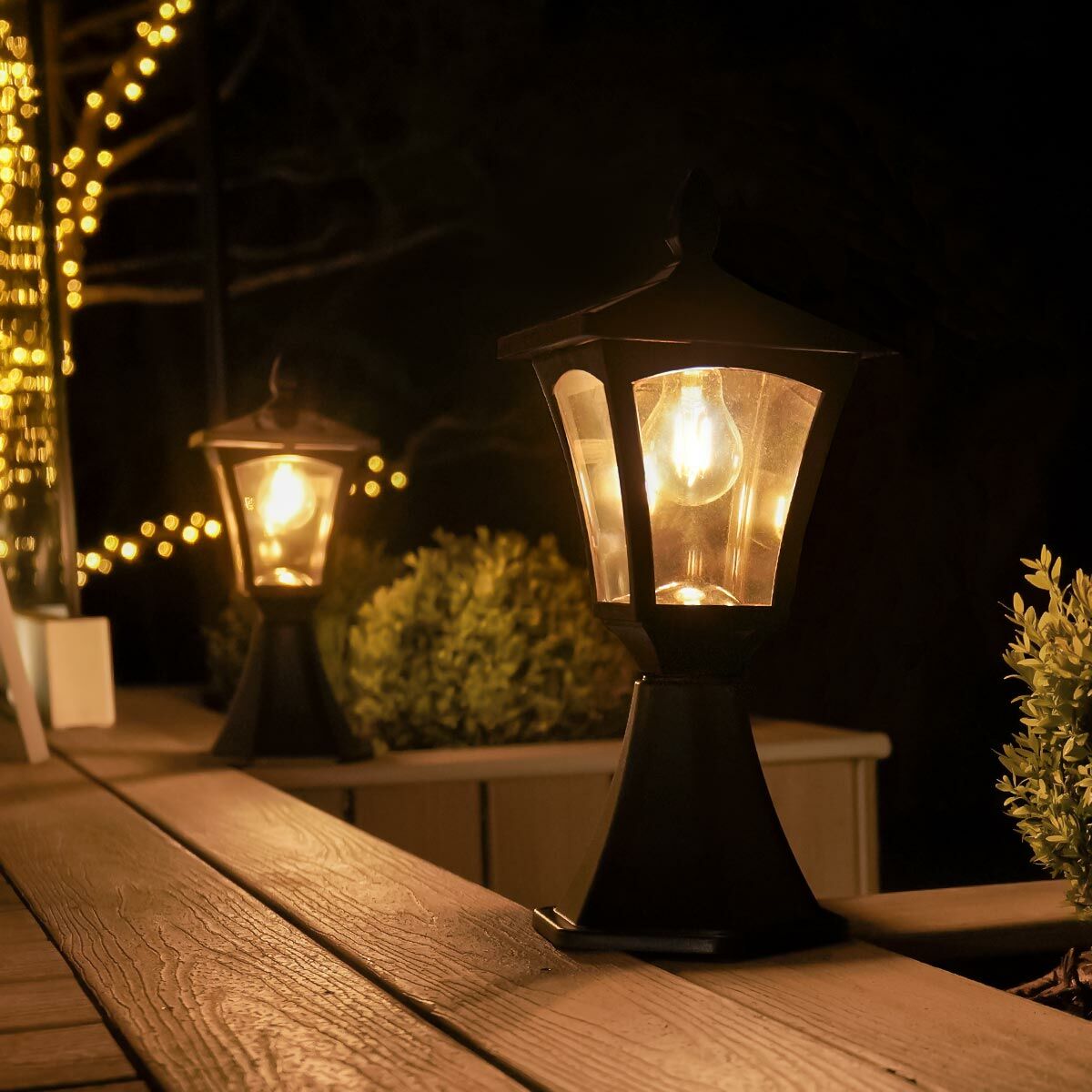
Solar garden lights illuminating wooden deck at night
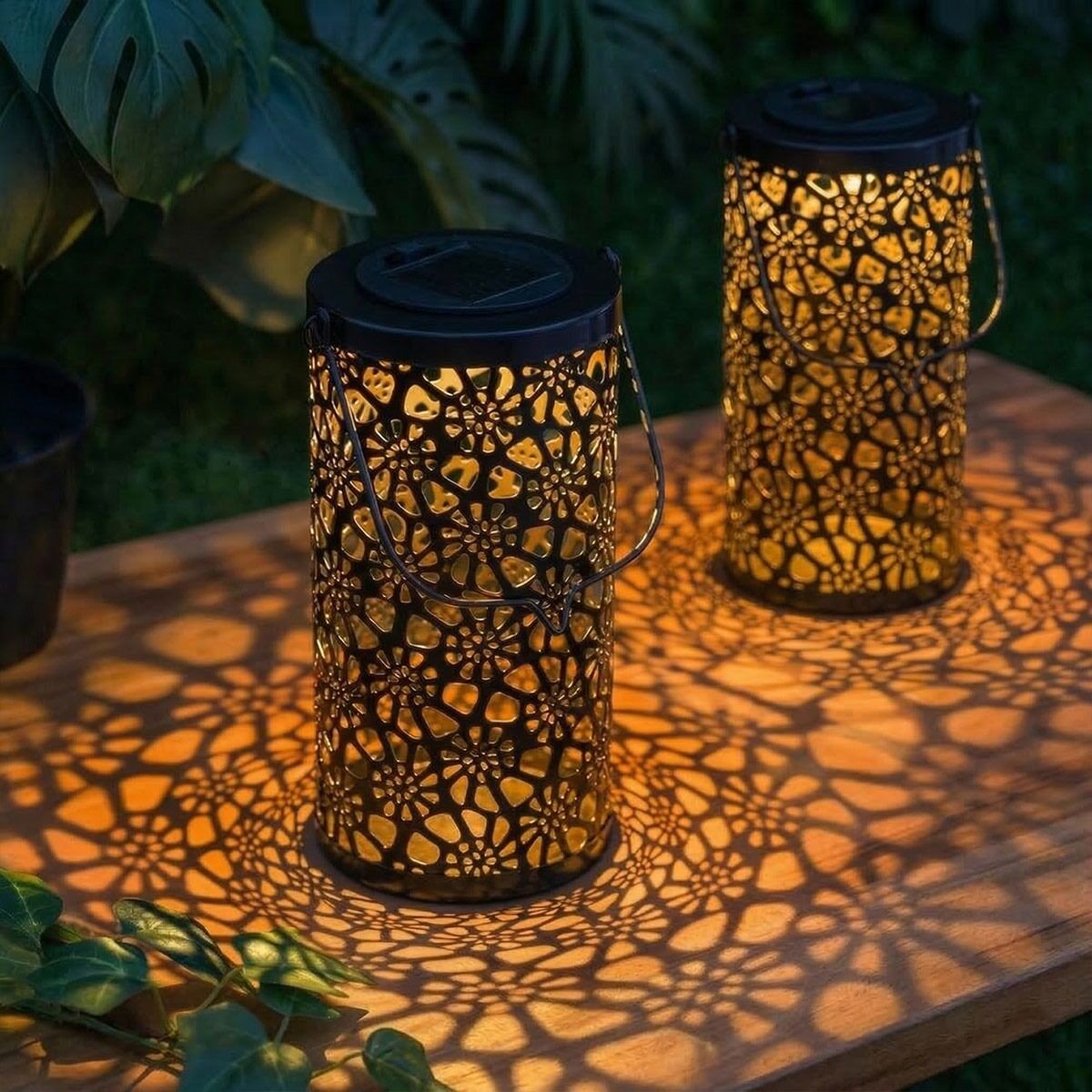
Festive Lights Solar Lanterns
An assessment of residential outdoor spaces indicates that decorative lighting is treated as functional infrastructure rather than seasonal ornamentation.
CHARNOCK RICHARD, CHORLEY, UNITED KINGDOM, July 11, 2026 /EINPresswire.com/ -- A review of residential landscaping and outdoor-living practices has concluded that decorative garden lighting now occupies a central role in the widely documented "outdoor room" trend, in which households treat gardens, patios and terraces as functional extensions of interior living space. The assessment, drawn from consumer renovation surveys, market analysis and design commentary, finds that festoon lights, connectable string systems and low-level fixtures are increasingly installed to extend the usable hours of outdoor areas after sunset, with demand concentrated in the spring and summer entertaining season.The findings position exterior lighting as a determining factor in whether an outdoor space functions after dark. As designers and homeowners divide gardens into defined zones for dining, lounging and circulation, illumination has become the element that makes those zones usable once daylight fades. The shift reflects a broader change in how outdoor lighting is specified: away from a single high-intensity source and towards multiple lower-output fixtures arranged in layers.
The Garden as an Extension of Interior Living Space
The reclassification of gardens as additional rooms has been building for several years and has been reinforced by post-pandemic changes in how households use their homes. Renovation surveys consistently identify improving appearance, adding space for entertaining and extending the living area of a property as leading motivations for outdoor projects, ranking above purely horticultural goals. A 2026 outdoor-living report covering established Western markets found that roughly three-quarters of homeowners wished they spent more time outside, and that close to six in ten planned to invest in their outdoor spaces during the year, with durability and everyday usability cited as priorities.
Design commentary has tracked the same pattern. Landscape professionals increasingly describe gardens in terms of discrete "rooms," using pergolas, planting, low walls and level changes to separate a dining area from a lounge or a quiet corner. The approach mirrors interior layouts, where distinct areas serve distinct functions while remaining visually connected. Lighting is treated as the mechanism that extends this arrangement into the evening, allowing a space designed for daytime use to remain functional and legible after sunset.
Analysts note that the trend has practical drivers beyond aesthetics. Average dwelling sizes have contracted in many urban areas, increasing the value placed on usable outdoor square footage. Where interior space is limited, a garden that can host meals, gatherings and relaxation into the evening effectively enlarges the home. Illumination is the component that converts a seasonal, daytime asset into one available across longer periods.
From Single-Source Floodlighting to Layered, Zoned Illumination
Historically, residential garden lighting fell into two categories: functional security floodlighting, designed to illuminate large areas abruptly, and token decorative additions such as a single string of fairy lights. Design assessments indicate that neither approach supports sustained evening use. High-intensity floodlights create sharp contrast and glare that is poorly suited to dining or conversation, while isolated decorative strings provide insufficient coverage to define a usable space.
Contemporary practice favours a layered method that distributes light across several fixtures at different heights and intensities. Overhead festoon or catenary lighting establishes a canopy across a seating or dining area; low-level path and spike lights mark circulation routes and boundaries; and wall-mounted or planter-integrated fixtures add accent light at intermediate levels. The combined effect is a more uniform, lower-glare field of illumination that allows separate garden zones to be read and used independently.
"The way people specify garden lighting has changed considerably," said Jana Dalton, a specialist in exterior lighting at Festive Lights. "A decade ago the default was one bright fixture or a token set of lights. Now the priority is layering warm, lower-output sources so that a dining area, a seating area and a path each have their own light. It is closer to how interiors are lit than to traditional security floodlighting, and it is what makes an outdoor space genuinely usable in the evening rather than simply visible."
The emphasis on warm colour temperatures and controllable output distinguishes the current approach from earlier security-led installations. Rather than a single abrupt light level, layered schemes aim for a graduated ambience that can support both social gatherings and quieter use, with brighter task lighting reserved for cooking or dining surfaces.
Connectable and Wire-Free Systems Broaden Where Lighting Can Be Installed
The practicality of layered garden lighting has been supported by developments in how fixtures are powered and connected. For many years, extensive outdoor displays were constrained by proximity to external mains sockets, and large installations often required trenching, buried conduit or professional electrical work. The introduction of connectable, plug-and-play systems has reduced those constraints.
Modern connectable string and festoon systems allow multiple lengths to be linked from a single low-voltage source, distributing light across large gardens without additional wiring points. Battery packs and solar units extend coverage further, enabling installation in areas with no access to mains power, such as detached seating areas, remote borders and boundary fences. The result is that lighting can be positioned according to how a space is used rather than where sockets happen to be located.
Market analysis reflects the same shift. Within the decorative string-light category, battery-operated and rechargeable options have been identified as a growing segment, and residential outdoor décor is reported to be the fastest-growing end use, accounting for a substantial share of demand as consumers extend patios, gardens and balconies for social use. The reduction in installation complexity has lowered the barrier to establishing a fully lit outdoor space and has broadened adoption beyond households willing to commission electrical work.
Energy Efficiency and the Economics of Extended Evening Use
The move from decorative to functional evening lighting has been made economically viable by the transition to light-emitting diode (LED) technology. Industry data indicate that LEDs now account for the substantial majority of outdoor string-light sales, with incandescent and halogen products falling to a small fraction of new purchases. LED sets are commonly rated for operating lives of between 25,000 and 50,000 hours and draw a fraction of the power of the incandescent products they have replaced.
The efficiency change alters the economics of leaving lighting active for whole evenings. A layered display that would once have carried meaningful running costs can now operate at low wattage, making sustained use across an evening, or across a season, more practical. Solar-powered fixtures reduce running costs further by drawing on stored charge rather than mains supply, though their output depends on charging conditions.
"Running cost used to be a genuine limitation on how long people were willing to keep garden lighting switched on," Dalton said. "With LED and solar, that calculation has changed. A full festoon scheme can run for an entire evening at a low draw, which is what allows lighting to shift from something switched on briefly to something that supports normal use of the space after dark. Durability matters just as much, because a fixture that fails after one season does not deliver that benefit."
Analysts observe that lower operating costs, combined with falling component prices, have contributed to steady expansion in the outdoor lighting market overall. Estimates vary by source, but the global outdoor lighting market has been valued at roughly seventeen billion US dollars in recent assessments and is projected to grow at a high-single-digit annual rate over the remainder of the decade, driven in part by residential demand and the shift towards energy-efficient systems.
Weather Resistance and the Move to Year-Round Installation
The reliability of outdoor lighting as functional infrastructure depends on its performance in adverse conditions. Fixtures intended for permanent installation are subject to moisture, temperature variation, ultraviolet exposure and wind, and the effectiveness of a layered scheme depends on components remaining operational across seasons.
Manufacturing specifications now commonly require defined Ingress Protection (IP) ratings, with decorative and boundary systems typically carrying IP44 to IP67 certifications to indicate resistance to water and dust. Sealed housings, double-insulated cabling and shatterproof polycarbonate components are used to maintain integrity under repeated weather exposure. These specifications have supported a transition from temporary, seasonal installation towards fixtures that remain in place year-round.
"Weatherproofing is what determines whether garden lighting is a temporary summer addition or a permanent part of the space," Dalton said. "Once fixtures are rated to stay outdoors through the seasons, households tend to leave them installed and use them across a much longer part of the year, not only during the peak summer weeks."
Solar performance has also been a factor in year-round viability. Early solar units were frequently criticised for weak output in low-light conditions, but higher-capacity storage cells and more efficient photovoltaic panels have improved reliability, including partial charging under overcast skies. The improvement has extended the seasonal window in which solar fixtures provide dependable output.
Market Conditions and a Broader Shift in Home Improvement
The growth in versatile outdoor lighting reflects a wider move towards multi-functional home improvement. As the cost of major structural work remains high, consumers have shown a preference for interventions that deliver both immediate aesthetic value and practical utility. Layered garden lighting satisfies both criteria, supporting evening entertaining while also improving visibility and perceived security around a property.
Within the decorative lighting category, commentators report that garden lighting is increasingly treated as an element of overall garden design rather than a purely functional purchase, with layering and zoning cited as defining considerations. The same commentary notes a decline in single-purpose installations in favour of schemes planned alongside planting, hard landscaping and furniture. Industry analysis further indicates that the residential segment continues to premiumise, with buyers trading up to connectable, smart-enabled and higher-specification products.
The pattern is observed across the United Kingdom and comparable international markets, where the combination of smaller average outdoor spaces, sustained interest in outdoor living and improved lighting technology has supported adoption. Seasonal demand remains concentrated in spring and summer, though the shift towards permanent, weather-rated installation has extended use into the shoulder seasons.
Practical Considerations for Layout and Placement
Design guidance associated with the trend emphasises planning lighting around how a space is used. Overhead festoon or catenary lighting is generally positioned above dining and seating areas to establish a defined canopy; lower-output path and spike lighting is used to mark routes and edges; and accent fixtures highlight planting, walls or structural features. Warm colour temperatures are typically preferred for social areas, with brighter, more focused light reserved for cooking or dining surfaces.
Practitioners also note the importance of managing glare and avoiding over-illumination, which can undermine the ambience a layered scheme is intended to create. The objective, according to design commentary, is a graduated distribution of light that keeps each zone legible without producing the sharp contrast associated with single-source floodlighting.
The convergence of outdoor-living behaviour, connectable and wire-free technology, LED efficiency and weather-rated construction has repositioned decorative garden lighting from a seasonal decorative purchase into a functional component of how households use outdoor space. As gardens continue to be treated as extensions of the home, exterior lighting is likely to remain central to the design of usable, year-round outdoor environments.
About Festive Lights
Festive Lights is a United Kingdom-based supplier of exterior and interior decorative lighting, focusing on the distribution of connectable LED string and festoon systems, solar-powered fixtures, battery-operated lighting and motion-sensor units for residential and commercial use. The company's product range is manufactured to defined weatherproofing standards and is supplied to both consumers and professional installers. Established for over two decades and based in Charnock Richard, Chorley, the organisation maintains an emphasis on product durability, weatherproofing certification and accessible installation.
Jana Dalton
Festive Lights
1257792111 ext.
email us here
Visit us on social media:
LinkedIn
Instagram
Facebook
YouTube
TikTok
X
Other
Legal Disclaimer:
EIN Presswire provides this news content "as is" without warranty of any kind. We do not accept any responsibility or liability for the accuracy, content, images, videos, licenses, completeness, legality, or reliability of the information contained in this article. If you have any complaints or copyright issues related to this article, kindly contact the author above.
