

Sedifly’s Founder and CEO, Joash Lee, Makes the Case for Purpose-Driven Firms at Economist Impact’s Sustainability Week
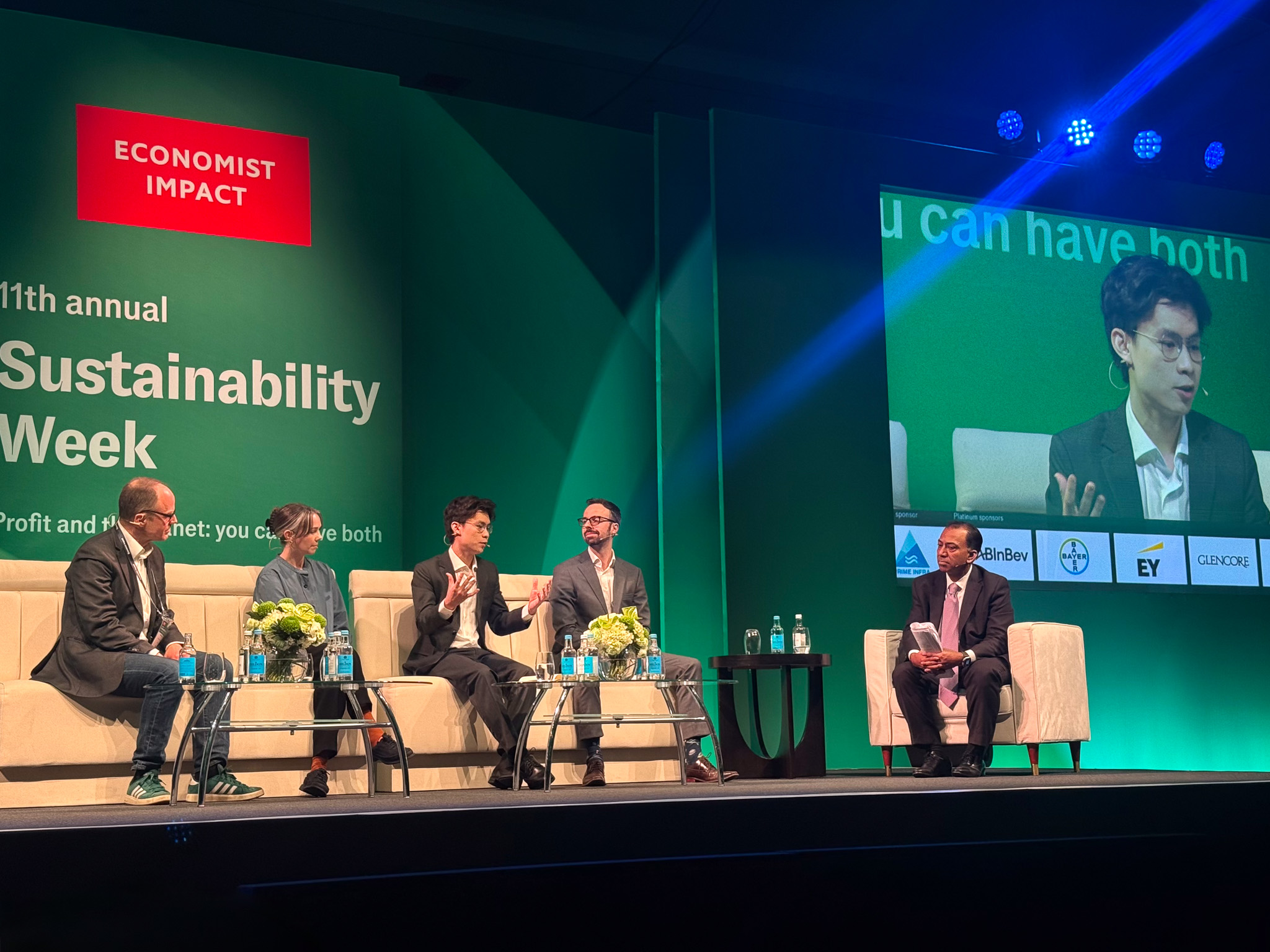
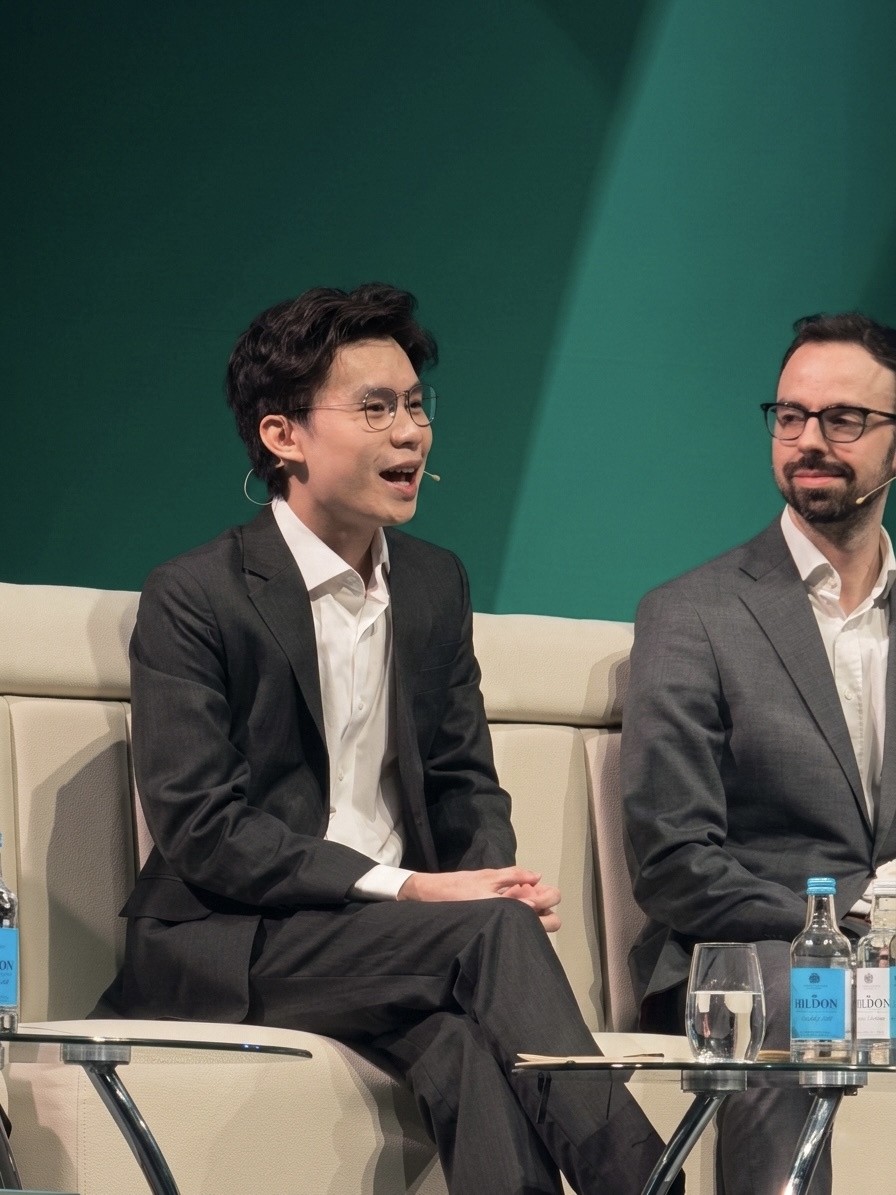
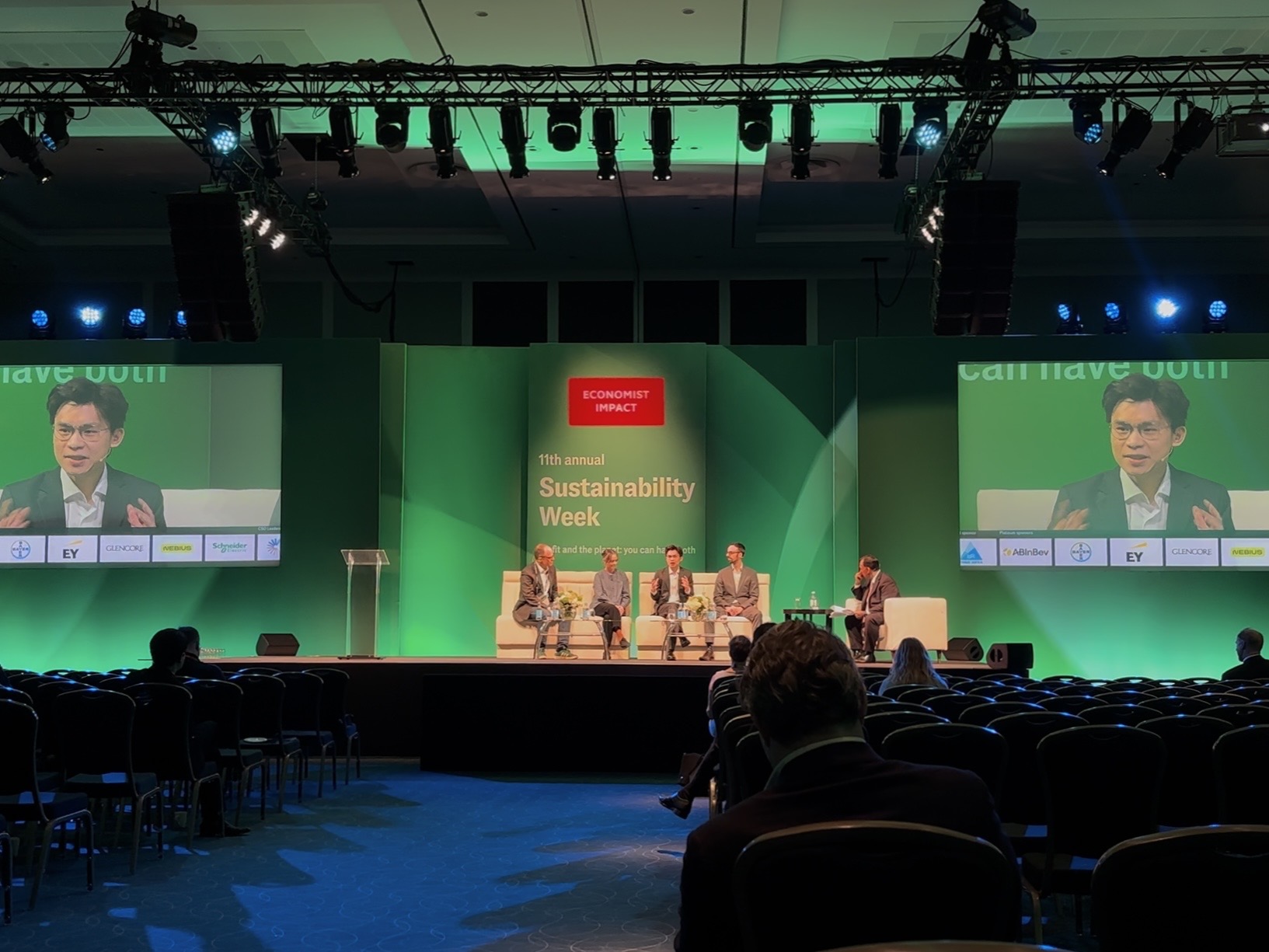
Sedifly's Joash Lee joins global leaders at Sustainability Week 2026 to discuss scaling purpose-driven tech and democratizing access to education.
Sustainability isn’t just about carbon or climate, it’s about whether societies can continue producing adaptable, capable people who can compete in a rapidly changing world.”
LONDON, UNITED KINGDOM, March 6, 2026 /EINPresswire.com/ -- As over 2,500 global leaders convened in London for the 11th annual Sustainability Week hosted by Economist Impact from 2 to 4 March 2026, discussions centered on one urgent question: How could businesses scale innovations that deliver both profit and planetary impact?— Joash Lee
Among the speakers was Joash Lee, Founder and CEO of Sedifly, who took the main stage during a plenary session alongside Nick Falkowski, Co-Founder and CEO of Meaningful Planet; Elin Green, Vice President of Brand Partnerships at Uncaged Innovations; Wolfgang Oels, COO at Ecosia; and Vijay Vaitheeswaran, Global Energy and Climate Innovation Editor at The Economist. The panel, titled “Entrepreneurship and Sustainability: Scaling Purpose-Driven Tech for the Planet,” brought together industry leaders to discuss how firms could build business models that combine commercial success with measurable impact.
Mr. Lee argued that conversations around sustainability should not be limited to climate or environmental issues alone. In his view, the long-term resilience of societies depends just as much on the strength of their human capital.
“Sustainability isn’t just about carbon or climate, it’s about whether societies can continue producing adaptable, capable people who can compete in a rapidly changing world,” Mr. Lee noted.
He described what he calls the “three Ps of sustainable capitalism” — purpose, performance, and profit. Rather than treating profit and purpose as conflicting priorities, Mr. Lee said companies that begin with a clear mission often perform better operationally, which ultimately drives stronger financial outcomes.
A growing body of research supports this view. A widely cited study by Oxford University and Arabesque Partners, which reviewed more than 200 academic papers, found that companies with strong environmental, social, and governance practices often outperform counterparts over the long run and demonstrate stronger operational performance.
“Organizations built around shared purpose see stronger internal alignment. This, in turn, reduces friction, improves performance, and over time, leads to better long-term financial returns,” he said.
Case in point, Sedifly, which started with purpose, has yielded great outcomes both for its students and financially despite being less than a year old. Its students are up to 10x more likely to get into a college of their choice, and it has attained a 100% acceptance rate where all of its students got into at least one out of their top five choices, while the company exceeded six-figures in revenue just a month after its 3x oversubscribed pre-seed round last November.
Economists have also long highlighted the role of education in economic resilience. The World Bank’s Human Capital Project posits that investments in education and skills are central to long-term productivity and economic growth because they shape the capabilities of future workers and the competitiveness of national economies.
Mr. Lee highlighted a structural gap in global education. While international education remains one of the most powerful drivers of social mobility, access to high-quality guidance is uneven. Traditional admissions consulting services can cost tens of thousands of dollars, placing them out of reach for many capable students.
Sedifly addresses this challenge by rethinking how education support is delivered. Using a modular curriculum to guide students applying to universities abroad, primarily in the US and UK, Sedifly’s team effectively drives better service and consistency, while maintaining costs. Its proprietary framework leverages “Lego-like” building blocks to provide students with personalized guidance that highlights their unique strengths and stretches their potential, rather than force fitting students into a fixed mold.
Mr. Lee compared the approach to modular systems used in other industries. Some electric vehicle manufacturers, for example, use modular skateboard platforms that allow them to accelerate production while keeping costs under control.
“The same principle applies to education,” Mr. Lee said. “If you build the right systems, you can scale without compromising on quality.”
As the discussion turned to the future of purpose-driven companies, Mr. Lee emphasized that solving global challenges will require collaboration across business, education, and public institutions.
Sedifly’s participation at Sustainability Week reaffirms our commitment to democratizing access to education, while reflecting a growing recognition among industry leaders that education and human capital development play a central role in building resilient and sustainable economies.
#
About Sedifly:
Sedifly is a global EdTech firm based in Singapore helping students access top colleges through mentorship-driven admissions strategy, academic enrichment, and long-term profile development.
Visit www.sedifly.com for more information.
Public Relations Team
Sedifly Pte. Ltd.
info@sedifly.com
Legal Disclaimer:
EIN Presswire provides this news content "as is" without warranty of any kind. We do not accept any responsibility or liability for the accuracy, content, images, videos, licenses, completeness, legality, or reliability of the information contained in this article. If you have any complaints or copyright issues related to this article, kindly contact the author above.
